
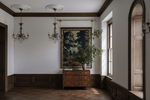
Entryway and Stairway Wall Decor: How to Choose a Medieval Castle Tapestry
, by heartcraft , 6 min reading time
, by heartcraft , 6 min reading time
Learn how to style a scenic tapestry in an entryway or stairway, with practical advice on vertical layouts, castle landscapes, colour, scale and secure hanging.
The entryway sets the tone for the whole home. It is the first space guests see and the place you pass through every day, yet it is often difficult to decorate because floor space is limited. Stair landings and narrow hallways can present the same challenge.
A scenic tapestry makes excellent use of these vertical surfaces. It adds colour, texture and visual depth without taking up valuable floor space. From a dramatic castle scene to a quiet woodland path, the right medieval castle tapestry can turn an overlooked wall into a memorable first impression.

Entryways often contain practical pieces such as a console table, coat hooks, a mirror or a bench. A woven wall hanging softens those functional elements and gives the area a stronger sense of identity. Unlike a collection of small frames, one well-chosen piece creates a clear focal point as soon as someone walks through the door.
It also works well in homes with traditional architectural details. A tapestry can sit naturally alongside panelled walls, timber floors, stone, brass hardware and painted woodwork, while adding warmth to a modern hallway with simple lines.
Vertical walls usually benefit from a design that draws the eye upwards. A tall castle, tower, woodland path or architectural landscape can make a narrow entryway feel more layered and give the ceiling greater presence.
The 17th Century Landscapes Flemish Verdure Vertical Tapestry is well suited to a tall wall or stair landing. Its vertical format can sit beside a doorway, at the end of a hallway or above a slim console without competing with the circulation space.

For a wider entrance hall, a landscape with a broader horizon can create a sense of depth. The 17th Century French Royal Verdure Castle Tapestry combines trees, architecture and distant perspective, making it a strong choice for a larger uninterrupted wall.

A medieval castle tapestry naturally brings a sense of history and storytelling to an entryway. Towers and distant buildings lead the eye into the scene, which can make a short hallway feel deeper. Look for a composition with a clear focal point rather than an image that is equally busy across every inch.
If the entrance already has dark wood or strong architectural details, choose a tapestry with a balanced palette of green, blue, cream and muted gold. If the space is pale and minimal, a deeper landscape can provide the contrast needed to make the wall feel finished.
A 17th-Century Verdure Royal Gardens Tapestry offers a softer interpretation of historic wall decor. Its garden landscape can work beautifully in an entryway where you want atmosphere and detail without an overly formal look.

With a console table: centre the tapestry with the table and leave enough space for a lamp, vase or small tray. Keep the surface edited so the artwork remains the main feature.
With a mirror: avoid placing a mirror directly over a detailed tapestry, as the two focal points may compete. Instead, position the mirror on the adjacent wall or use a small reflective accent on the console.
With a bench: a vertical tapestry above a slim bench can create a welcoming arrival point. Keep the lower edge high enough to avoid contact with coats, bags and everyday movement.
With a painted wall: use one colour from the artwork as a subtle wall or trim accent. Soft olive, warm cream, muted blue and earthy taupe are easy to combine with historic landscapes.
Stairways are often overlooked because of their awkward angles and changing sightlines. A tapestry can bring continuity to the space, especially when hung on the landing or on the largest flat section of wall rather than directly over the steepest part of the stairs.
Choose a size that can be viewed comfortably from both the lower and upper levels. A tall design with a strong central subject is usually easier to read than a very wide scene. For safety, make sure the hanging system is secure and that the bottom edge does not interfere with the handrail or the normal path of movement.
In a home with warm timber, the Italian Tuscan Villa Tapestry Wall Hanging can create a natural connection between the staircase and the rest of the interior. Its architectural landscape suits terracotta, cream, olive and brown tones.

Small spaces do not always need pale artwork. A detailed medieval wall tapestry can add depth, but it helps to repeat only one or two colours elsewhere. Pick a shade from the foliage, sky or architecture and use it in a runner, cushion, vase or coat hook.
For a lighter, botanical feel, a William Morris Owl & Willow Landscape Tapestry introduces woodland character and decorative foliage. Pair it with simple furniture and uncluttered accessories so the entryway feels collected rather than crowded.

If you are searching for a medieval tapestry for sale, measure the wall before choosing the artwork. Note the width of nearby doors, furniture and stair rails, then leave enough surrounding space for the design to feel intentional.
Also consider the weight, finished edges and hanging method. A medieval tapestry wall hanging should be secured appropriately for the wall type, particularly in a busy entryway or stairwell. Keep the fabric away from persistent damp, direct sunlight and areas where it may be brushed by bags or coats.
A reproduction medieval tapestry can bring the mood of historic European interiors into a contemporary home, but the result does not need to feel like a museum display. Pair it with clean-lined furniture, simple lighting and a limited palette for a look that feels comfortable and current.
The best entryway decor gives guests an immediate sense of the home beyond it. A castle landscape suggests history and travel, a woodland scene creates calm, and a formal garden adds a touch of ceremony. With the right scale and a secure hanging method, Landscape Tapestries can transform an empty wall into a warm, personal introduction to your space.



$128.29 - $208.21


$158.06 - $198.24


$158.69 - $208.69


$96.28 - $125.68


