
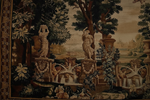
The Ultimate Guide to Verdure Landscape Tapestries: History, Meaning & How to Style Them at Home
, Von heartcraft , 5 min Lesezeit
, Von heartcraft , 5 min Lesezeit
Discover the 500-year history of verdure landscape tapestries — from Flemish forest scenes to 17th-century peacock and fountain masterpieces. Your complete guide to choosing and styling verdure tapestries for bedroom walls and beyond.
Lush forests, exotic birds, cascading fountains — verdure tapestries have been transforming walls for over 500 years. Here's everything you need to know.
The word verdure comes from the Old French word for "greenery" — and that's exactly what these tapestries celebrate. Unlike narrative tapestries that tell a specific story (think battle scenes or biblical allegories), verdure tapestries immerse you in a living landscape: dense foliage, flowering meadows, winding streams, and the creatures that inhabit them.
They first rose to prominence in the 15th century in Flanders (modern-day Belgium), where master weavers discovered that lush botanical scenes were not only breathtakingly beautiful — they were also extraordinarily versatile. A verdure tapestry could hang in a royal palace or a country manor and feel equally at home.
Five centuries later, that versatility hasn't changed one bit.
The great weaving cities of Tournai, Brussels, and Oudenaarde became the epicenters of verdure tapestry production. Oudenaarde, in particular, became so synonymous with verdure weaving that these tapestries were sometimes simply called "Oudenaarde tapestries."
Early verdure designs featured dense, almost jungle-like foliage — oak leaves, acanthus scrolls, and exotic plants — often populated with deer, rabbits, and birds peeking through the undergrowth. The effect was immersive: standing before one felt like stepping into an enchanted forest.
By the 1600s, verdure tapestries had evolved dramatically. The wild forest gave way to formal garden landscapes — reflecting the era's obsession with order, symmetry, and the mastery of nature.
Two motifs came to define this golden era:
Together, the peacock and fountain became the signature composition of the era's most coveted verdure tapestries — woven for the courts of France, Spain, and the Holy Roman Empire.

👉 [Shop Our 17th-Century Peacock & Fountain Tapestry Collection]
The original verdure style — dense canopies of oak, acanthus, and exotic leaves, with small animals hidden among the branches. These create a dramatic, immersive effect on large walls.
A flat, jewel-toned field scattered with hundreds of individual flowers and plants. Less architectural than forest verdure, millefleurs tapestries feel intimate and romantic — perfect for bedrooms and reading nooks.
The 17th-century evolution: symmetrical garden layouts, stone fountains, topiary hedges, and aristocratic birds. These tapestries carry a sense of grandeur and order that works beautifully in entryways and living rooms.

👉 [Explore Garden & Fountain Tapestries]
Peacocks, parrots, herons, and pheasants set against lush botanical backgrounds. These tapestries bring color, movement, and a touch of the exotic — ideal as a bedroom focal wall or above a fireplace.

👉 [View Peacock & Exotic Bird Tapestries]
The bedroom is where verdure tapestries truly shine. Hung behind the bed as a statement headboard alternative, a lush forest or peacock tapestry transforms your sleeping space into a sanctuary.
Styling tips for the bedroom:

👉 [Shop Bedroom Verdure Tapestries]
A large-format verdure tapestry in the entryway or above the sofa sets an immediate tone of sophistication and warmth. The organic, nature-inspired imagery softens hard architectural lines and adds a layer of texture that no paint color or wallpaper can replicate.

In rooms with limited natural light, a verdure tapestry creates the illusion of a window opening onto a lush garden — a trick interior designers have used for centuries in basement rooms and north-facing spaces.
Verdure tapestries work at almost any scale, but here are the most common applications:
When 17th-century weavers depicted a peacock spreading its magnificent tail before a stone fountain, they were doing more than decorating a wall. They were capturing a vision of paradise — a world of beauty, abundance, and natural splendor that transcended the ordinary.

That vision is just as powerful today.
Whether you're drawn to the wild enchantment of a forest verdure, the romantic scatter of a millefleurs field, or the aristocratic elegance of a peacock and fountain scene — there is a verdure tapestry that belongs in your home.
Ready to bring the garden inside?
👉 [Browse the Full Verdure Landscape Tapestry Collection]



$128.29 - $208.21


$158.06 - $198.24


$158.69 - $208.69


$96.28 - $125.68


